C'mon In

Thoughts, remarks, links, ideas, & notes on music, film, culture, friendship, love, sex, literature, sports, women, wine--from my mind and the minds of many others. Add your own...

Tuesday, November 24, 2009

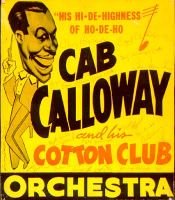
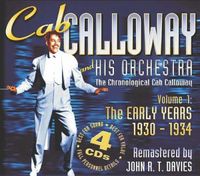
Don't Bust Your Conk--Cab Calloway's Hepster Dictionary

A few entries from THE NEW CAB CALLOWAY'S HEPSTER'S DICTIONARY, Language of Jive (1944 edition). How much we still use these words and phrases, particularly among musicians. Sinatra had his own language as well, with "bird" (penis) and "Harvey" (square guy) being among the entries. Nowhere near as hep, er, hip as Cab. Check these out.

Accordion
Squeeze-Box or Groan-Box
Ain't coming on that tab
won't accept the proposition. Usually abbr. to "I ain't coming."
Armstrongs
musical notes in the upper register, high trumpet notes.
Barbecue
the girl friend, a beauty
Battle
a very homely girl, a crone.
Beat
Lacking anything. Ex, "I am beat for my cash", "I am beat to my socks" (lacking everything).
Beat it out
play it hot, emphasize the rhythym.
Beat up the chops (or the gums)
to talk, converse, be loquacious.
Bible
the gospel truth. Ex., "It's the bible!"
Blew their wigs
excited with enthusiasm, gone crazy.
Blip
something very good. Ex., "That's a blip"; "She's a blip."
Blow your wig
get excited, enthusiastic
Boot
to give. Ex., "Boot me that glove."
Break it up
to win applause, to stop the show.
Bust your conk
apply yourself diligently, break your neck.
Canary
girl vocalist.
Capped
outdone, surpassed.
Chirp
female singer.
Clambake
ad lib session, every man for himself, a jam session not in the groove.
Clarinet
Licorice Stick or Gob Stick
Comes on like gangbusters
plays, sings, or dances in a terrific manner, par excellence in any department. Sometimes abbr. to "That singer really comes on!"
Corny
old-fashioned, stale.
Creeps out like the shadow
"comes on," but in smooth, suave, sophisticated manner.
Crumb crushers
teeth.
Cups
sleep. Ex., "I gotta catch some cups."
Dicty
high-class, nifty, smart.
Dig
meet. Ex., "I'll plant you now and dig you later."
Doghouse
bass fiddle.
Doss
sleep. Ex., "I'm a little beat for my doss." [See dosshouse]
Down with it
through with it.
Drums
Suitcase, Hides, or Skins
Fall out
to be overcome with emotion. Ex., "The cats fell out when he took that solo."
Final
to leave, to go home. Ex., "I finaled to my pad" (went to bed); "We copped a final" (went home).
Fine dinner
a good-looking girl.
Fraughty issue
a very sad message, a deplorable state of affairs.
Freeby
no charge, gratis. Ex., "The meal was a freeby."
Frisking the whiskers
what the cats do when they are warming up for a swing session.
Frolic pad
place of entertainment, theater, nightclub
Fruiting
fickle, fooling around with no particular object.
Gabriels
trumpet players.
Get in there
go to work, get busy, make it hot, give all you've got.
Gimme some skin
shake hands.
Got your boots on
you know what it is all about, you are a hep cat, you are wise.
Got your glasses on
you are ritzy or snooty, you fail to recognize your friends, you are up-stage.
Gravy
profits.
Groovy
fine. Ex., "I feel groovy." [Didn't know it was such an old expression.]
Ground grippers
new shoes.
Gut-bucket
low-down music.
Hard
fine, good. Ex., "That's a hard tie you're wearing."
Hard spiel
interesting line of talk. [From Yiddish]
Hincty
conceited, snooty.
Hype
build up for a loan, wooing a girl, persuasive talk, cajole.
Ickaroo
someone who can't dance or dig the jive
Icky
one who is not hip, a stupid person, can't collar the jive.
Igg
to ignore someone. Ex., "Don't igg me!)
In the groove
perfect, no deviation, down the alley.
Jam
improvised swing music. Ex., "That's swell jam."
Jelly
anything free, on the house.
Joint is jumping
the place is lively, the club is leaping with fun.
Jumped in port
arrived in town.
Kill me
show me a good time, send me.
Killer-diller
a great thrill.
Knock
give. Ex., "Knock me a kiss."
Kopasetic
absolutely okay, the tops.
Land O'Darkness
Harlem
Lay some iron
to tap dance. Ex., "Jack, you really laid some iron that last show!"
Lay your racket
to jive, to sell an idea, to promote a proposition.
Lindy Crush
Girl or Guy you would just LOVE to dance with.
Line
cost, price, money. Ex., "What is the line on this drape" (how much does this suit cost)? "Have you got the line in the mouse" (do you have the cash in your pocket)? Also, in replying, all figures are doubled. Ex., "This drape is line forty" (this suit costs twenty dollars).Lock (v.): to acquire something
Lock up
to acquire something exclusively. Ex., "He's got that chick locked up"; "I'm gonna lock up that deal."
Melted out
broke.
Mess
something good. Ex., "That last drink was a mess."
Mitt pounding
applause.
Muggin'
making 'em laugh, putting on the jive.
Murder
something excellent or terrific. Ex., "That's solid murder, gate!"
Nix out
to eliminate, get rid of. Ex., "I nixed that chick out last week"; "I nixed my garments" (undressed).
Off-time jive
a sorry excuse, saying the wrong thing.
Off the cob
corny, out of date.
Out of the world
perfect rendition. Ex., "That sax chorus was out of the world."
Piano
Storehouse or Ivories
Ready
100 per cent in every way. Ex., "That fried chicken was ready."
Ride
to swing, to keep perfect tempo in playing or singing
Righteous
splendid, okay. Ex., "That was a righteous queen I dug you with last black."
Rock me
send me, kill me, move me with rhythym.
Sad
terrible. Ex., "That man is sadder than a map." "That was the saddest meal I ever collared."
Sam got you
you've been drafted into the army.
Saxophone
Plumbing or Reeds
Sky piece
hat.
Spoutin'
talking too much.
Stache
to file, to hide away, to secrete.
To dribble
to stutter. Ex., "He talked in dribbles."
Togged to the bricks
dressed to kill, from head to toe.
Trilly
to leave, to depart. Ex., "Well, I guess I'll trilly."
Trombone
Tram or Slush-Pump
Truck
to go somewhere. Ex., "I think I'll truck on down to the ginmill (bar)."
Tuba
Foghorn
Twister to the slammer
the key to the door.
V-8
a chick who spurns company, is independent, is not amenable.
Vibraphone
Ironworks
Violin
Squeak-Box
Wrong riff
the wrong thing said or done. Ex., "You're coming up on the wrong riff."
Xylophone
Woodpile
Yarddog
uncouth, badly attired, unattractive male or female.
Zoot suit
the ultimate in clothes. The only totally and truly American civilian suit

Tuesday, October 13, 2009

Boogie Stomp! American Piano Masters

Ten days ago, I caught a show downtown that reminded me with fresh vigor why I'm a musician. So this particular column is less a performance review than it is a celebration of that show and all that’s good and true in musical expression. It was a night of American music as played by two American Masters, with its own point of view, its own deep intentions and traditions, and total freedom from the traps of age, fashion, era, whatever. I’m not into the whole “old is better” thing either; there’s plenty of valuable and great music being made today. This show just had all the goods.

The show in question was on Friday night, October 2, at the ornate Gem Theater. Titled Boogie Stomp!, it’s a simple premise—two pianists, Bob Seeley and Bob Baldori, playing stride, boogie-woogie, blues and backbeat rock & roll on twin concert grand pianos. Between songs they talk about their lives, careers and influences with an anecdotal ease that creates that rarest of things—the artists and audience in a shared revelry that then creates this third presence in the room. A higher love. As performing musicians, it’s what we all strive for with every show.

The relationship between Seeley and Baldori began when they met at a tribute to Chuck Berry's original piano player, Johnny Johnson. They started working together soon after Baldori went out and sat in at Seeley's regular gig at Charley's Crab in Troy. A mutual interest in the "two piano" boogie style of legendary greats Pete Johnson and Albert Ammons led them to work out some of the original four hand classics. They also discovered a common repertoire of mutually familiar blues, boogie and jazz tunes that Baldori could also double on harmonica. From there it was a short step to creating original pieces for their live show.

A brief look back at this mongrel of a genre: By the late 1930s and throughout the '40s, the world of jazz and popular music was dominated by what was known as “The Big Three" of Boogie Woogie piano---Pete Johnson, Albert Ammons, and Meade Lux Lewis. Their style was called Boogie, but their playing covered a country mile, and included jazz, blues, swing, stride, ragtime, barrelhouse, and the roots of rock and roll.

In this age of adult attention deficiency, rapid resolution and the endless catering to juvenilia, Boogie Stomp! and both Bobs are a welcome antidote. Both men are over 60; both perform with the vitality of 25 year olds. More importantly, both men illuminate, in slightly varied ways, this long river of American music right before our eyes and ears.

Seeley is the last living connection to the founders of blues and boogie—Sippie Wallace, Meade Lux Lewis, Big Maceo Merriwether, even the legendary executive and talent scout John Hammond. He’s honored the world over as the finest living stride and boogie piano player, winning competitions and performing in European music meccas like Paris and Moscow annually. He's a musical God in Europe. An indomitable 82 that would pass for 55 at any point, Seeley sits with the terse, rounded shoulders of a boxer and plays with a rumbling, clarion intensity. Pure magic.

Baldori had a Top 10 hit in 1966 with his band The Woolies, covering Bo Diddley’s seminal “Who Do You Love” with producer Lou Adler. He then became one of Chuck Berry’s indispensable sidemen and friends, playing with rock’s founder everywhere from the White House to the Silverdome over the last 30 years. His playing has deep roots in early electric blues--Muddy Waters, Sonny Boy Williamson and Memphis Slim are dominant, but this is extravagantly alive music in the here and now, not some vintage period piece relic.

Between these two men, a musical continuum of 100 years is writ large, stomped out and hand delivered with the dynamic thrust of a freight train. Baldori is more in the Johnny Johnson--Professor Longhair style while Seeley actually learned his chops from Lewis. He has a lighter touch than Lewis however--more poetic, like Jimmy Yancey playing Beethoven on a bender. In another day, both players might've been called Cat House piano players. Both have booming left hands that are like granite in their time keeping.

Baldori, coming from rock & roll and Chicago Blues, is more the overt showman. His harp playing is as exciting as anyone since Paul Butterfield or a young James Cotton, with a bullrush of distorted notes quickly giving away to bright, melodic runs and at times comic physical expression. Between songs he lays out the genesis of all this music, where it went and what it became, while Seeley tells stories about his vast career with self effacing wit.

Is Boogie Stomp! blues? R&B? Rock & Roll? Boogie-Woogie? Jazz? It’s all that, plus the historical oral tradition of the shaman, the elder or high priest. Is it academic? Nah. Is it history? Yea, but it’s way more fun than school ever was. All this ran through my mind as these guys were replicating the famous 1938 night at Carnegie Hall when Hammond joined Ammons, Lewis and Pete Johnson together for a performance that launched what was called the “boogie craze.” All these complimentary styles—from Boogie to Rock to Blues to Soul—are creations and extensions of the black experience in America. Both Bobs are white, but they set all that straight in their historical overview.

Now, I have to make known this small disclaimer, although my exuberance for this show was not increased by our friendship. When I was 19, I had two once-in-a-lifetime mentors. First was Boogie Bob Baldori himself, who put me in his band when I was greener than green. I could barely play a lick, and my hip quotient was zero. But he saw something he liked, and he taught me everything--how to work an audience, how to wrap a cord after a gig, how to listen to each other on stage, how to conduct business. He taught me about keeping tempo, using dynamics, how something quiet can kill an audience (in a good way), and how a band should work with and around the singer. He taught me where the back of the beat is. He turned me on to Howlin Wolf, Robert Johnson, Henry Adams and Luis Bunuel. He took me to Chicago repeatedly to see the best blues acts, where I'd meet these eccentric characters deep inside the music business. It's one of those debts you can never repay--you just try to live up to it.


Through Bob and his band, I was soon playing bass on some dates with Chuck Berry, who taught me about guitar playing, syncopation, feel, lyric writing and vocal clarity. Here I was working with the guy who literally wrote the book. Listen to Chuck sing—he enunciates every syllable, like the King’s English.

Baldori and Seeley have now shot enough footage all over the world that a documentary also called Boogie Stomp! will soon be finished. It will document how the basic elements of boogie woogie---rhythm and improvisation over a blues form--became the backbone of American music. Boogie Stomp!will also tell the story of the two Bobs and their unlikely pairing--two heads, four hands and two pianos that almost blew the roof off that lovely old Gem. The joint was packed, and at curtain's close we were all still standing and cheering. Do yourself a favor...see Boogie Stomp! when it comes 'round again, hopefully during the holidays.


Don't just wait for the flick.

Monday, September 21, 2009

The House I Lived In: Frank Sinatra & His Music

It seems like Frank Sinatra and his music are more alive today than when he was actually with us. TV shows, remastered re-issued cds, Vegas tributes and now a Twyla Tharp Broadway revue featuring his music called "Come Fly With Me"--Frank is everywhere these days. Loved, revered and admired for his tough, take no crap attitude and of course all the wondrous music.

It's nothin' new to me. Frank's always been in my house or in my head. Growing up, Sinatra’s music filled my house. As a boy I recall the presence of his voice being a symptom of good times--parties, Saturday nights, perfume and cigarettes, cuff links sweeping down to pat my hair. People briefly at the top of their game. Certain songs--”Fly Me To The Moon,” “Tangerine,” “Where Or When”--still evoke the fragile good fortune that comes with familial and social blessing. Sinatra is so laden with family emotion and generational demarcation that writing about him has seemed daunting.

In my adolescence, Sinatra became all that was square and phony: anathema to the counterculture, actually now the dominant rock and roll culture. When compared to rock’s songwriters, songwriters like Gershwin, Porter, Van Huesen, Cahn and Kern seemed like Tin Pan Alley irrelevance. That's what we thought anyway. It was not the only thing I was wrong about. I now know that the Sinatra songbook, particularly the songs of Cole Porter, represent stylized imagination at its most refined. Genius is often one word where there once were eight. And the currency of timeless work is in tackling the big subjects: Love, Death, Aging, Faith and Loneliness.

Anyway, my father hated rock and I hated Frank. Our stalemate was beautifully balanced. I’m not entirely sure when the thaw came, but, to paraphrase Mark Twain, I can’t believe how much the old man has learned in the last few years. There are still some things that can put a young listener off on Sinatra--his mythical meanness, his ribbing of Sammy Davis in the Rat Pack days (which was extremely misleading; Sinatra was an ardent civil rights activist), his clumsy interpretation of rock songs (in George Harrison’s “Something” Frank sings, “You stick around, Jack, it may show”), his punchy sentimentality, his ultimate descent into self parody. (All of the greats, with their style once so powerfully fresh and seminal, seem to eventually erode into self parody.)

Like many of this century’s great artists Sinatra is highly enigmatic. James Isaacs points out in his liner notes to Sinatra In Paris that there’s an artistic schizophrenia attendant to Sinatra’s genius: There is Sinatra--an artist worthy of mention in the same breath as Picasso and Casals--and Frank--everybody’s Pal Joey, the King of the Ring-A-Ding-Ding, in Dave Marsh’s words “the original Gangsta rapper.” It’s the difference between his singing voice, that cello-like instrument sustaining rosewood notes and romantic dreams of The Love, and his speaking voice, which is never more than a few short blocks from Hoboken via Las Vegas.

The cocky swagger fronts the bruised feelings--That's Frank. My father has always said that Sinatra achieved his tone from having his vocal cords stomped on, from getting kicked around. Sinatra was washed up a bit at 38, between recording contracts, singing poorly, divorced and hopelessly in love with Ava Gardner, not working as much as he had in his “Voice” period.

There’s little question that he went on to become the greatest interpretive singer we’ve ever heard. It was Frank who perpetrated the macho myth; Sinatra, on the other hand, lived to sing. He never condescended to his audience. Instead he increasingly valued his audience and moved closer to it as he aged. He eventually transcended popular culture completely and made age and enduring--rock’s great enemies--his most potent subject, save love.

I have a bootleg of Frank, Dean and Sammy at Sam Giancana’s club in Chicago, the Villa Venice, in November of 1962. The height of their powers. It’s hilarious, poignant, utterly embarrassing and totally dated--great period piece farce. Any good singing, even any respect for the audience’s expectations, are secondary to boozing. Out of the blue a woman, a fan from Milwaukee, hesitantly approaches the stage. Says she drove all night and can’t she please hear a serious song? Martin tells her to buy an album. Much laughter. Frank, meaner, mockingly offers her bus fare home. When she insists on hearing “Nancy” there’s an enormous sea change: Frank becomes Sinatra.

Along with “Night and Day,” “Nancy (With The Laughing Face)” was something of a charmed talisman for Sinatra; he would eventually record it four times before retiring. But on this night he becomes contrite, shuts Dean and the crowd up, calls her request “fair and reasonable” and proceeds to kill the song. Not a dry eye in the house. Frank knew where his bread was buttered; Sinatra loved his audience and had the goods to reach both their hearts and souls.

Ironically, Sinatra actually hurried the demise of the big bands he loved so much by ensuring that the front man was the focal point of the performance. It’s what he did with the projection of language that kills me, even after much hard-headed analysis. Instead of using melisma or even “sung” syllables, Sinatra developed a legato conversational quality that emphasized meaning as much, if not more, than melody. In another irony, it was this quality of Sinatra’s that then paved the way for rock’s great lyrical expressionists--Dylan, Lennon and Joni Mitchell. When they first showed up, Frank hated ‘em. Same with Elvis. By the late 60s he was doing TV with Elvis and regularly recording rock related material.

Every singer--really anybody who sings--marvels at Sinatra’s physical gifts. It’s been said that his jaw has a certain shape that accounts for some unusual projection of sound, etc. One thing is true. When he sang, nothing but sound came from his mouth; that is, very little breath or forced vibrato accompanied the full voice. In this sense his instrument was much like a cello--a brandy soaked tone reflected from wood and string.

Sinatra also did much to invent the concept album, an innovation usually associated with Sgt. Pepper or Tommy. While at Capitol in the 50s he alternated humongous concoctions of swing--Songs For Young Lovers (1954) Come Dance With Me (1959)--with sad song cycles like In The Wee Small Hours and Where Are You? 1958's Frank Sinatra Sings For Only The Lonely is simply one of the finest collection of mood songs ever recorded. “What’s New,” “Angel Eyes,” “One For My Baby” and “Blues In The Night” all on one record. Of course much credit goes to a trio of brilliant arrangers--Billy May, Gordon Jenkins and the unmatched Nelson Riddle--for this amazing emotional range over the years.

After starting Reprise Records in 1961, Sinatra had one unqualified triumph, 1965's September Of My Years, and a late 60s string of very interesting failures. But it’s the love songs we’ll forever expect--no, need--from Sinatra. Love songs are becoming a scarce commodity today. And no one sings of the Big Love anymore, that nostalgic notion that says that action is larger than intent.

My father used to tell me, once a day it seems like now, to TURN THAT GUITAR DOWN and get a hair cut, put on a tux and make a livin’ singing Sinatra songs on cruise ships. And my buddies and I would drag our ass into the garage, turn up the guitars and laugh at how short sighted and unhip he was. Now I call up the old man and he’s listening to my own record in the background. I’ve been trying to get him to listen to some of these remastered Sinatra cds for almost six months. I can’t get him to listen, can’t get him to talk about how great Frank is. He wants to talk about rock & roll or my music, of all things. Our stalemate remains beautifully balanced.

Wednesday, September 2, 2009

The GM Bankruptcy and the Failed Promise: Next Time Kiss Me First

In Detroit in the fall of 2009, to be pissed off or scared is nearly the norm--and I'm not alone. Like many of the 122,000 salaried GM retirees (and their wives, husbands and children) who are in the process of getting comprehensively screwed by what is or was General Motors, the US government, and the US bankruptcy court in the Southern District of New York that's handling the GM bankruptcy, I'm bitter.

Nearly thirty years ago, my father, a GM employee until he retired in 1989, received a life insurance policy from GM as a form of compensation. It's something he was proud of, something that gave him real peace of mind over the years.

Last week, at 85 and in poor health, he received a letter from GM and the newly-involved Met Life insurance company stating that the entire policy was cancelled immediately, although he could re-apply within 31 days to pay his own premiums for an individual policy of up to $100,000. The monthly premium for that amount--a fraction of his long-held existing policy--would be $847 a month. Not possible for most folks, let alone a widower on a pension. And it comes with another lovely little clause: if he were to die within two years of initiating this policy, the only benefits paid out would be the collected premiums, not the $100,000.

Going off an actuarial table that I found at the Social Security Administration website, if an 85 year old man were to actually buy the full amount of the policy he held for all those years, premiums would be more than $45,000 for a single year. Then, consider that term life insurance policies hold no cash value, and that the actuarial tables show a one-year mortality rate for 85-year olds of about 11%. The bottom line, as corporate lemmings like to say, is this: There is not enough -- and there was never going to be enough -- money in the so-called bail-out to pay for any sustained period of time for the impacted retirees and their beneficiaries. When it comes to the bail-out, the bankers got theirs, the insurance giants got theirs, but the auto companies and their employees got theirs from behind.

This is of course morally reprehensible. Disgusting. Had he known 35 years ago that this would happen to his policy in his late years, he surely would've bought adequate life insurance along the way. That opportunity is now ripped away from him, gone. My mother passed away in 2008, so this next disturbing aspect is not an issue with our family. But the question looms: What of the thousands of other men and women of his age who are GM retirees who will now leave elderly spouses and impaired dependents penniless upon their own death?

My dad epitomizes the Greatest Generation. He was a lieutenant in the Air Force during WWII, came home, went to MSU, married and began a family. He then worked at the GM Assembly plant in Flint after the war, on the floor, before returning to his hometown of Saginaw to run the credit arm for Draper Chevrolet for many years. He's always been a car man, and he gave the auto trade his life. He began working as a salaried GM employee in Trenton, NJ in 1971, and stayed there for several years before being promoted to Detroit in the early 80s, where he oversaw a field team of 15 lobbyists working in the country's state capitals. He retired in 1989.

He was raised with a sense of obligation toward his community. You got involved and aligned your own ambition with the common welfare of your place and your people. He was the mayor of Saginaw from 1962-'66, nominated the city's first black mayor, and twice ran for State Senate. He was President of the Michigan Municipal League. While at GM, he aggressively and successfully fought for our current seat belt laws.
So when I think of my dad, I think of someone who always treated life as a progressive, optimistic adventure. He loves America and believed in and loved every minute of his GM work life. To him, life was a grand experience, to give in to the cliché, a journey of possibilities. I know few people more beloved by others than my dad, and it's probably because I've never known a better listener. His manner is to always inquire about your welfare, rarely talk of himself—and listen. His life has been made up of people of all walks, all means, all creeds, and colors. He lived his life not as he found it, but as he made it happen.

He grew up on the east side of Saginaw in the 20s & 30s, a place that formed his values and convictions But as he aged, he accepted the world’s change, and found in himself the ability to change, to think less conventionally, to think broadly about things he once thought were absolute. I think of him as someone who held in his heart the fire’s center. Someone who was alive–alive with talk, alive with faith, alive with friendship, alive with responsibility, wanting many things at the same time, always saying the reassuring thing, ambitious while still being someone you could count on, always.

And even if he thought his life to be at times too hard or frustrating, he never shared that desperation; he kept on greeting the good and the bad with the same face. And when things were really good, and he was at GM in its best days, he never lost his common touch. And when things were really bad, he did that hardest thing, and put his head down and took care of his family while maintaining his dignity.

Now it's really tough however. His health care has been decreased as well, but not eliminated in full. Amid all the recent bailout billions, banking loans, insurance industry debt forgiven, and exorbitant bonuses paid to men and women who performed poorly, something like this is being done to a man like my dad, and thousands like him. After believing things were one way for more than 30 years, to find that you're uninsured and not feeling well is very much akin to the Bernard Madoff situation, which was considered the crime of the century. And the government is finding money for those plaintiffs! Is the GM Bankruptcy also a crime?

It was, of course, the members of President Obama's task force who forced this--a result that said such costs would not be supported any longer. And it was Obama's resolution that said that public resistance, from the likes of Rick Waggoner, would be met by getting kicked to the curb (which he was, and quickly). Now that the political will has been shown to cut off these costs (and with precious little blow-back from anyone anywhere), it's not as if there will be political will to restore them. So I hold President Obama and Treasury Secretary Geithner accountable in this, for their lack of vision, and lack of concern.

It won't be GM, and it won't be the government, and it won't be Met Life, but possibly there's enough in something called the Motors Liquidation Corporation till to do something for these retirees. Or, there may one day be a class action settlement on all this, but it will be well after my dad's gone, and will likely be next to worthless, pennies on the dollar. There's no legal recourse, no answer from congressmen I've contacted, no answer from Met Life or GM. New GM (GM Reinvention) doesn't want to know about "old" GM--that's also very clear.

This last generation of GM corporate leaders, from Waggoner, Bob Lutz and John Smith on down, should be held directly accountable, their hundreds of millions in bonuses made conspicuous in comparison to the retirees' losses. In fact I hold the last generation of GM leaders responsible for the litany of failure that crushed GM, once the safest bet in the world: the Fiat fiasco, the bungling of the Oldsmobile shutdown, the Aztec, the Hummer, the disastrous end to the original Electric Vehicle program, and of course the poor financial planning that ultimately left the company far too vulnerable to the events of the past year.

A Michigan-based group called the GM Retirees Association hired a San Francisco law firm to bring their cause before the Bankruptcy Court, with no success. As their lead counsel said to me yesterday, "The first thing we learn in law school is that very few wrongs in this world are actually redressed."

The beautiful go blameless, part XXIV.

Thursday, August 20, 2009

Little Willie John Weather

If you're into soul music as much as I am, and particularly early Detroit soul, you're gonna love this. 'Cuz two wonderful things happened this summer regarding the greatest, in my opinion, of all the soul singers, Little Willie John.

Actually three things happened this summer that remind me of LWJ and his continuing influence, but the third thing is not good at all--the sad sad death of Michael Jackson. To me, MJ was the last of something I revere and love--the brilliant string of solo romantic male soul singers, possibly starting with Nolan Strong or Clyde McPhatter and definitely ending with Michael. So many greats came between them--LWJ, James Brown, Jackie Wilson, Marvin Gaye, Sam Cooke, Otis Redding, David Ruffin, Donny Hathaway, James Carr, Ben E. King, Luther Vandross. As you can see, Detroit figures famously in this continuum of singers.

On to the better things I mentioned earlier. One of them is personal, in this sense--I was contacted through a friend by Little Willie John's son, Kevin John, who still lives in Detroit and preserves his father's lofty reputation. I was thrilled to get to know him a little bit, and look forward to more talks about music with him. We've had some good exchanges about his dad, and about soul music in general. The other event is something we all can get with: a new collection called Little Willie John,Heaven All Around Me: The Later King Sessions, 1961-63,on Ace Records out of the UK, released earlier this summer.

Now, some brief introductory comments seem necessary when discussing early Detroit artists like Little Willie John, Jackie Wilson or Nolan Strong. It's necessary to discuss genre, location and intent--what they were tryin' to do-- with these singers. Genre is the primary premise for organizing and expressing the emotional details of their music; location informs why they sang what they sang and how they sang it. Their shared intent was probably simple–to make some money singing exciting songs before their career ended. But in one sense, they were all saved by soul, their music left immortal by how they sang.

Little Willie John's high tenor singing, in songs like "Talk To Me, Talk To Me" and "Fever," is best described as thunderclap music--music to be heard from an open window on an evening when the sky is turning somber just before dark. The clouds are steel grey and heavy with rain, and the air--it's late August--is fixed with heat. This is Little Willie John weather. Right now, tonight.His musical offspring are also soul singers: Bob Seger knew where to find his own soul; he knew the distance from Detroit to Memphis to be easily traveled. It's this connection, via Ann Peebles' "Come To Mama" (changed to "Come To Papa" for 1973's Beautiful Loser) and Otis Clay's "Tryin' To Live My Life Without You," that illuminates soul's colorless, borderless state.

The story goes that Seger was so disgusted with the Eagles' crappy1980 rip-off of "Tryin To Live My Life Without You" (give a listen to the bass line and rhythm guitar on "The Long Run") that he had to cut it himself and get it right. "Tryin' To Live My Life Without You" is introduced by Seger on his live Nine Tonight as an "old Memphis song" yet it was actually recorded by Clay with the Hi rhythm section and the Memphis Horns in Chicago in 1972. Seger may have felt a sense of debt to the song's composer, George Jackson. Jackson supplied Seger, for better or worse, with his monumental hit "Old Time Rock and Roll." If Seger felt indebted, it was probably to the soul tradition; he's one of the few white rockers who can truly deliver in a strict soul idiom.

My point is that the essential Detroit music is sewn by a thread; George Clinton has as much in common with Iggy Pop as he does with Nolan Strong; Kid Rock channels Seger as well as David Ruffin. It’s not easily traced; it’s just something you feel.And when viewed as disparate elements in a related social chain, the music seems to say much more. Smokey Robinson & Stevie Wonder’s "Tears of a Clown," for instance, at first listen just another jilted love song, tells the story of the black attitude in Detroit in 1968: "If there's a smile on my face/ it's only there trying to fool the public." While Smokey wasn’t the activist others were, he spoke for far more than the lonely people in his songs. And the thing about Motown--who wasn't a listener? Hell, who still isn't?

As they were building Motown, Berry Gordy and Smokey Robinson were quite vigilant in acknowledging the sources of their new sound. Gordy, as a songwriter for Jackie Wilson and others, was both a fan and participant in the 50's doo-wop, R&B and rockabilly scene that was to fuel the popular music of the sixties and seventies. Authenticity was something Gordy concerned himself with, although commercial appeal was most important to the Motown machine. Today, there's little question that Motown was, as Gerald Early writes, "The most triumphant black sound in American history." It was not only real, it was real good.

But Little Willie John, recording in the 50s and early 60s before his death at a very young age, wason his own. His music is a product of his own passion, vision, humor and ambition. Life isn't fair; a life chasing hit records is even less fair. So I'm not trying to naively demand that we remember a great singer like LWJ, who is certainly beyond obscure to a modern audience, but to illuminate him as a model and clarify his connection to the artists and music today. (Check out how the spoken middle section of Nolan Strong's 1954 hit "The Wind," for instance, sounds like a scratchy outake from Michael Jackson's Thriller.)And while LWJ earnestly sought "cross over" success, it was on his terms. For Willie John and Nolan Strong, it meant the chance to challenge white America's dominance of the fifties and sixties, an opportunity to reject the dominant ideology of the culture they saw and felt yet could not fully participate in. Willie John in particular shrugged off the final degree of American alienation by refusing to borrow from white culture. He paid dearly for this, but his immediate musical offspring--James Brown--succeeded in subverting all ideology. He invented a new music and language.

Barely five feet tall and only 21 when he recorded Joe Seneca’s "Talk to Me, Talk To Me," Little Willie John sings the song in a voice of desperate passion. He sounds twenty years older, a man prematurely celebrating and disowning his own mortal soul. As he pleads with his lover to talk with him, his voice implies what will happen if she doesn't.

"Talk To Me, Talk To Me" wasn't Little Willie John's biggest hit. He is best known for "Fever," which he recorded in 1956 and took to #1 on the R&B chart, and "Sleep," a 1923 song that Benny Carter and Les Paul had cut in the early fifties and Willie John adapted to vocals in 1959. "Fever," of course, was recorded later by countless other artists, most notably Peggy Lee, and became a top ten pop hit, though Little Willie John's version far outsold hers.

Born William Edward John in Arkansas in 1937 (some sources say William Brooks) John moved to Detroit in the forties when his father, Mervis, took a job at Dodge Main. Willie John began singing in the United Five, a gospel quintet fronted by his elder sister Mabel.He was only 14 in 1951 when Johnny Otis, the R&B band leader who was also a scout for Syd Nathan's King Records in Cincinnati, heard Little Willie John sing at an amateur talent show at the Paradise Theater in Detroit. Nathan passed on him and instead signed the Royals, who appeared on the same bill. By the time of their monstrous 1954 "Work With Me, Annie" smash, the Royals had become Hank Ballard & the Midnighters.

Willie John then sang big band standards with Duke Ellington, Count Basie and Paul "Hucklebuck" Williams,and recorded with the legendary Joe Von Battle in Detroit before Nathan signed him in 1955. At one of Little Willie John's initial sessions, King producer Henry Glover sped up a simple jump blues song of Titus Turner's called "All Around The World" and Little Willie John had his first hit.While the song was still on the R&B charts, Willie John wrote and recorded the sadly elegant "Need Your Love So Bad," a song of such sensual feeling that it's hard to believe the singer is only 19. To hear his tortured tenor crackle out of an AM radio in the fading light of an evening in 1956 must have been more than haunting. This was R&B that was no longer ambivalent in its aim or origin. It was carnal concentration in the white Eisenhower world. But his singing said that everything was now up for grabs.

"Fever," recorded March 1, 1956, followed "Need Your Love So Bad," and Little Willie John was a pop star. Somewhatarrogant and a notorious spendthrift, Willie John began angering the wrong people. Though he still recorded wonderful material--"Young Girl," "Person To Person," "There is Someone In This World For Me"--he didn't have another hit until "Talk To Me, Talk To Me" in 1958 and "Sleep" a year later. In 1961, the bottom fell out. "It Only Hurts A Little While" was the last performance of note; he was dropped by King after a final recording session in 1963. This is the period the new Ace cd deals with, and it's brilliant.

After stabbing a man to death in a Seattle cafe, Willie John was sent to prison in Walla Walla, Washington, where he died on May 27, 1968, not yet 32 years old. This is where his story takes on the Faustian myth of the blues man Robert Johnson: men so distinctly gifted at such a young age that they must have sold their soul to the devil for their talent. Robert Johnson is "saved" by history's recognition of his genius--a genius that rock and roll has since built much of its own myth upon.

Rumors of vicious beatings and fights with inmates abound (James Brown went to see him in prison and Willie John greeted him in a wheelchair), but his death is largely credited to pneumonia, although the 1968 death certificate reads heart attack. Brown later cut a tribute LP, Thinking of Little Willie John...and Other Nice Things, but Little Willie John, who seemed to understand love and loss greater than any other gospel trained soul singer ever, remains a legend neglected. Check out the ACE cd if you love impassioned singing in any style. It's Little Willie John weather.

Sunday, August 9, 2009

Michigan In Summer/Radio Bummer

I recently spent a week up north with my family at a place on Lake Huron--same spot I've been going to since I was a boy. Just a couple hours away, it's in vast contrast to life here in Detroit. Driving north on M-13, which splits off from I-75 just north of Bay City, you enter some kind of agrarian time warp. Driving through these towns--Kawkawlin, Linwood, Pinconning, Omer, Au Gres--my nostalgia mingles with all the recent changes.

What this economy has wrought on these small towns. Twenty years ago these were towns filled with small factories, mills, farms and small services. Back then, there was just a hint of the encroaching exurbia, a gentrified, touristy, more cosmopolitan northern town. Now these towns show only traces of the old order--farmers still raise a fine spray of silt behind their tractors on summer afternoons, and manufacturers still empty a few workers out to roadside bars at midday. But not like they once did. M-13 is now like a traveling flea market; boats, cars, furniture, clothing–everything is for sale on lawns for miles. I noticed that even the homes themselves are often for sale.

The core of life is now about entertainment and lifestyle enrichment; we all seem to be consumed with enjoying enjoyment. The farms are smaller, the mills and factories are largely gone, and every little ranch house has a satellite dish. I'm certainly a part of the entertainment culture, but I'm also resistant to change. I like it the way it was--which is of course now only in my memory.

In the middle of our week, we drove up to Tawas, a gleaming resort town rimmed with cottage motels right on the water. On the road to Tawas, there are several square miles of chalky white hilltop quarries. The town in the middle of all this, Alabaster, is little more than the home of the U.S. Gypsum Company, a business founded in the 1890's by some guy named Daniel Houghton. Gypsum is actually a derivation of alabaster, which has been used to make drywall for most of this century. The entire setting sits like a bleached ghost town, hazy and surreal, with water towers, silos and quansut huts that recall an earlier, more productive time. The white dust shrouds the entire quarry. But the Gypsum-works stand as a testimonial to this time of transformation, this move from making things to making things fun.

Evidence of the old way of doing things, and how that's all come to pass, is everywhere. The most haunting fixture is a two mile aerial tramway that stands, eerily immobile, on cement based towers that run well into Lake Huron. This method of hauling Gypsum from the water looks antiquated, even sinister. I'm told it still runs, with its huge, conical containers swaying above the icy blue water. The company still employs workers, though not like it once did, and far away from this old site. At the gates of the Gypsum works sits The Alabaster Bible Church, a ramshackle house with one cracked stained glass window and white soot on its steps.

I love looking at a corn field or wheat field in the wind as much as I do the ocean. I guess that makes me a Midwesterner through and through. If you're reading this, you're most likely a Midwesterner too. You know and understand the obligations of being a Midwesterner. In the true Midwest, we rarely deflect this obligation. We place the value of living in loyalty to a few friends and family, maybe one or two chosen institutions, and finally in a deep trust with the land and water around us.

Small AM radio stations are sprinkled throughout this part of Michigan; in the summer you drive through them, a crackling aural gauntlet, leaning into the plain talk and forgotten songs as if into a lucid warmth. Removed from the radio wars in Detroit, these stations simply play what they think sounds good to the people around them--presumably without focus groups, person by person marketing, and demographic surveys. I like hearing a crop report with my music.

My friend Pam Rossi had her wonderful weekend radio show on WCSX, Over Easy, cut in half time-wise recently because her programmers cited a new kind of Arbitron rating, where barely a fraction of Detroit's 4 million people report on listening and viewing habits. Over Easy is a show devoted to real music, with real musicians--many of them regional artists, like yours truly, and it has a large and loyal audience. It's been a Detroit institution for nearly 20 years, first with Carey Carlson as host, then with Pam. It's been something the music community can agree on and celebrate...I mean, what makes "us," us? Things like Over Easy. In our growing technology-based, bottom-line-driven culture, shows like Pam's are considered expendable. It's hard, however, to justify many many things just based on their economic value. Rural AM radio may be the last place to find random radio programming in the form of traditional Top 40.

I try to avoid playing cds while driving because popular music is still, for better or worse, found on the radio. And it's still largely concerned with love and its losses, digging back into childhood or extending far into life for its romantic inventions.

While driving late one night last week on M-13 I heard, among other things, both the terrible and the transcendent: Bocephus's new "Forged By Fire," his father's (Hank Williams) "Kaw-Liga," Kenny Chesney's Summertime," Sam & Dave's "Hummin'," Hamilton, Joe Frank & Reynolds' "Don't Pull Your Love Out," and Sam Cooke's gorgeous "Nobody Knows The Trouble I've Seen." Unconcerned with mega numbers and musically-hip perceptions, these stations provide for a listener an emotional autobiography, playing songs that fall between the fading of the big bands and the beginning of rock, or between what's now classic rock and what's new country.

At the time I made little point of these observations, outside of noticing the pull that popular music still has as it guides us toward a way in which we want to live. But that suggestion is enormous. It’s the notion that these aren’t merely old songs on rural radio, but instead brief illuminations of the contrast between what's simple and what's sophisticated in America, between what's popular culture and what is high art–at times even between what's bad and what's good. American culture is a beautiful mess, dependent on a conversation half-heard and talked over, yet somehow still well received. So there--now I feel much better enjoying "Delilah" by Tom Jones as it sizzled across the wires just outside Au Gres, followed quickly by the okra bean report.

Sunday, June 7, 2009

Love & Marriage: The Problem With Prop 8 Decision

This journal entry is also my first column for yournewsdetroit.com--please check out this new online news source when you have a chance. Thanks.


I realize that the debate over same sex marriage is a divisive one, among friends and sometimes even family members. However last week’s upholding of Prop 8 in California is depressing. For people looking for the right to marry the person they love and have it validated by society, it must be enraging.


I’ve been in what the court (and most of the country) refers to as a “normal” marriage for 20 years. They’ve easily been the best years of my life, although they’ve also been very challenging. Marriage is a little like hang gliding or scuba diving or even a near-death experience--only those that have been there can truly provide any lasting insight to it--why it works or doesn’t work, why it’s the most enlightened experiment in human connection, or why it may be mankind’s most preposterous folly. (I believe the former.) Like those other activities I mentioned, you can only know by doing, and there’s no going back.


I can’t speak for my wife, but I got married for many reasons--most were emotional, some societal, others never to be understood. It was important for me to be jumping into something, in a social sense--into a kind of acceptance, into a practiced art, out of my own panicky rebellion. I didn’t settle, as all unmarried people will accuse those that marry; I armed myself. If you haven’t notice lately, it’s an often brutal and unpredictable world, with loyalty and honesty being rare. If life is a game played against chaos and death, against entropy, then marriage means having more home games on your schedule than away.


So I’m writing this as an instinctive reaction to the California Prop 8 ruling, which upheld making same sex marriages illegal. Here’s the main point of this thing to me: no one ever called into question my ability (my right?) to marry the person of my own choosing.

The Prop 8 ruling is correctly perceived by the gay community as a double-barreled attack on human rights. I’m sure that the Christian righties and other opponents of gay marriage find the impetus for their opposition based in some public employment of what they consider to be moral. However, it seems to me that arguing about pre-established or preferred sexual behavior is akin to arguing the morality of a tree--that is, it’s something that simply is, static and obvious. So this ruling tries to give all of us the parameters of what a marriage is or should be. If you don’t think that affects you, and you happen to be a heterosexual, you’re wrong.


Our supposedly sophisticated and free society tends to be embarrassed by the entire idea of sex. What’s known as the “Other” or “Otherness” in this culture--anyone outside the accepted notion of what or who an American is--should never be automatically associated with unaccountable behavior. And that’s exactly how I read Prop 8’s results. Gay people are not to be trusted. Ridiculous.


Accountability, in fact, may be the only measure of a man or woman—gay or straight--that the government need concern itself with, if they need to concern themselves at all. The irony is that nothing, and I mean nothing, leads to more stringent accountability than the shared promise and demands of a marriage. So the questions should be ours, and they should be directed at opponents of civil same sex unions. For starters--Why are you not in favor of intelligent people moving freely toward a life of love and societal accountability?


They would probably counter with the belief that it’s simply wrong—immoral—to conduct yourself in this way and thus illegal for the state to condone behavior so contrary to “God’s wishes.” Being just a simple human, I could never assume to know God’s wishes. And so often, the word morality is used as a means of oppression, a cover for political tyranny and failed imagination. For the sake of argument let’s call morality any action that is unselfish, kind and noble. Add to that the fact that it’s any action done with some sort of Karmic concern; that in the long run we won’t be sorry for what we’ve done, whether it’s in line with some petty human law or not. Or better yet: moral action is simply action which is life affirming.


We're currently all talking about this issue with an idealistic, moral and even romantic view. The practical side of it is even more compelling--I have several gay friends that want to be married for the real life reasons, in addition to love and emotional security. They want what hetero marriages take for granted--health care when a spouse or partner is covered, tax breaks filing jointly, equal protection under the law.

As insignificant as it may seem to the hetero-married or the unmarried, it makes a difference when your relationship is validated by both society and our byzantine government. It's just one less thing to worry about.


The fight for equality and justice is a fight for all of us, gay or straight, white or black, man or woman. When law is created or upheld due to a hazy consensus on religious beliefs, it's inherently at odds with logic. If there are real values, and I believe there are, and those values celebrate, affirm and explore human life, then they should be confirmed by American society as good. Anyone wishing to marry another person they’ve deemed fit for them is saying to me that they’ve made some peace with their own idea of freedom and commitment. They know that with that freedom comes a responsibility to look and listen, to own up to their idea of love, and feel in their hearts and bones what God or Time requires of them. And that no law can touch.